
Darwin Day | February 12
- Sep 28, 2021
- 5 min read
Updated: May 30, 2022
Darwin Day is held annually around the world on February 12 to mark the anniversary of Charles Darwin's birth in 1809. Charles Darwin's family was Unitarian and from a young age he was encouraged to develop his observational skills and scientific method.
The American Humanist Association observes Darwin Day "to reflect and act on the principles of intellectual bravery, perpetual curiosity, scientific thinking, and hunger for truth as embodied in Charles Darwin. It is a day of celebration, activism, and international cooperation for the advancement of science, education, and human well-being."
I invite you to celebrate this day to lift up scientific method and humanism. Try a few of the actions and activities below, or use them as a springboard to create your own special traditions around Darwin Day.
How UU Connects
The 19th and 20th centuries saw a significant growth of humanism within the Unitarian denomination. Today, Darwin Day is a chance for UUs to celebrate rational thought, that the truth is always unfolding, and the synergy between science, awe, and faith.
| |
Principles (Ethics) | 4) Search for truth, 7) Web of life |
Sources | 5) Humanist teachings to heed reason and science |
Rocks (Theology) | 2) A unity makes us one, 5) Truth continues to be revealed |
Religious Traditions | Humanism, Earth-based Spirituality |
Facts & Figures (UU Connections) | |
Explore
Learn more about Darwin Day and Natural History! Check out these books at your library or local book store.
Who was Charles Darwin? (Gr.2-5)
Darwin and Evolution for Kids: His Life and Ideas with 21 Activities (Gr. 4-8+)
Bully for Brontosaurus, by Stephen Jay Gould
My Family and Other Animals, by Gerald Durrell
On the Origin of Species by Charles Darwin
Darwin Day information
Learn how Unitarians founded the American Humanist Association in the 1930s
Charles Darwin and the Tree of Life (video documentary)
Reading: "Reason and Reverence"
by Rev. William R. Murry, UU World, Winter 2006. (Read online.)
Excerpt: "Religious humanism is a life stance that exults in being alive in this unimaginably vast and breathtakingly beautiful universe and that finds joy and satisfaction in contributing to human betterment. Without a creed but with an emphasis on reason, compassion, community, nature, and social responsibility, it is a way of living that answers the religious and spiritual needs of people today. A new humanism is emerging among Unitarian Universalists, a religious humanism informed by cultural developments and recent discoveries in the natural and human sciences and grounded in the larger context of religious naturalism, a religious humanism that offers depth, meaning, and purpose without sacrificing intellectual honesty or the spiritual dimension."
Discussion / Journal Prompts:
How important to your personal faith are the UU principles and beliefs represented by Darwin Day?
In the article, Rev. Murry offers five characteristics of a successful modern religion. Do you agree with them? Would you change or add anything?
ENGAGE
Promote Science & Education
Write a letter to your local school board requesting more resources for STEM (Science, Technology, Engineering, Math). Sample letter
Join a local event (many events are listed online, or ask your local library). Or plan an event of your own and ask people to join you.
Post on social media an interesting fact about Darwin Day, or a photo taken at a Darwin Day activity.
Visit the Clergy Letter Project for religious activism for science. Have a conversation with your minister(s) and consider encouraging them to sign on, if they haven’t already.
Participate in the iNaturalist project
Host a Primordial Soup Roundtable

More about the primordial soup concept in biology. Recipe for "primordial soup." Or make minestrone, ribollita, chicken veggie soup, or other favorite,
Sit down for a meal with family or friends. Offer grace, if you wish. Over your shared meal, hold a roundtable discussion about science and technology affect your lives today. Pick a piece of technology to discuss (cell phone, microwave, internet, etc.).
Here are a few prompts from Jacques Ellul‘s 76 Reasonable Questions to Ask About Any Technology.
What are its effects on the health of the planet and of the person?
What are its effects on relationships?
What is its potential to become addictive?
Is it ugly?
What are its effects on the least advantaged in society?
Does it reduce, deaden, or enhance human creativity?
Does it undermine traditional moral authority?
Does it concentrate or equalize power?
Throw a Science Party
Darwin Day is a great time to invite friends and family over for a party celebrating science, invention and discovery. Create a party theme by picking party activities and foods that highlight a scientist of your choosing. Here are three Unitarian Universalist scientists worth celebrating!
Cecilia Payne-Gaposchkin
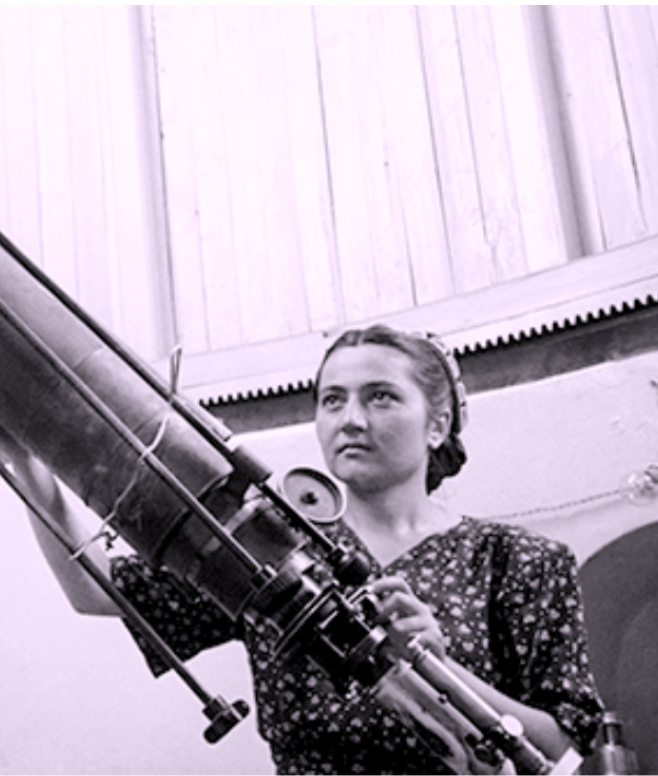
Cecilia Payne-Gaposchkin was the first female professor at Harvard University and the first person (male or female) to receive a PhD in Astronomy. Cecilia also taught RE at her church, the First Unitarian parish in Lexington, MA. In 1925, she was the first person to identify that stars were made of hydrogen and helium. Read more.
Party Ideas
Do a skit of the story of Cecilia’s life
Do a NASA science activity from about the sun and light
Bake Constellation Cookies
Play Constellation Detective
Make Hydrogen Ice Cream
Lewis Latimer
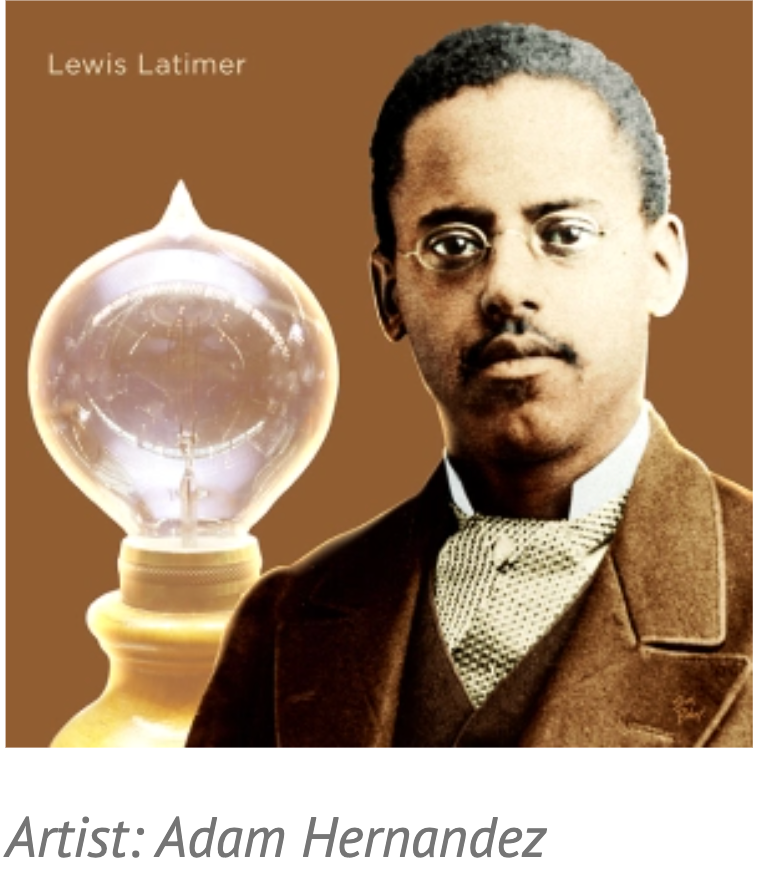
Unitarian Lewis Latimer was an early inventor and patent holder known for his work on the light bulb with Thomas Edison and the telephone with Alexander Graham Bell (also a Unitarian). An African-American born to escaped slaves, Lewis was brilliant, self-taught, and successful in multiple fields. He was one of the founders of the Unitarian Universalist Congregation of Queens in Flushing, NY. Read more.
Party Ideas
Learn more about Lewis Latimer from this biographical article. Ask guests to write down a fact they find inspirational about Lewis, and tape it on a poster board.
Try a string telephone experiment.
Listen to a podcast about Lewis Latimer
Have guests work together on the science experiment, Light a Bulb
Play the Electric Current game
Joseph Priestly

Invite your friends and have fun celebrating Joseph Priestley, a Unitarian minister who is most famous for discovering oxygen in 1774. Here are a few ideas to try (or put together your own ideas):
Try fun versions of three Priestley science experiments, or complete a favorite maker project related to chemistry
For younger kids, read aloud a story about Joseph Priestley
For older youth and adults, share facts about Joseph Priestley and his dramatic escape to Philadelphia after his house and office was burned by an angry mob
Try (flavored) soda water, which was invented by Joseph Priestley.
Resources for Worship
Readings: #417 Gaia, #428 The Dark Earth, #445 Womb of Stars, #529 The Stream of Life, #530 Out of the Stars, #550 We Belong to the Earth, #651 The Body is Humankind, #657 It Matters What We Believe
Hymns: #21 For the Beauty of the Earth, #203 All Creatures of the Earth & Sky, #343 A Firemist and a Planet, #398 To See the World
Take a Deep Dive into the UU Backstory
The use of rational thought, scientific method, and observation has been both promoted and debated throughout Unitarian and Universalist history. Check out the following readings to learn more about our UU heritage:
Unitarian minister Rev. William Ellery Channing gave a milestone sermon in 1819 in which he argued, among other things, reason must be the base of religious understanding. Read the Tapestry overview of Channing’s Baltimore Sermon.
Learn more about Joseph Priestly’s beliefs about religion and science in the UUA’s Tapestry of Faith article, Discovering Truth through Science and Religion.
After Darwin’s Origin of Species in 1859, Universalists led by Orello Cone and Alexander Abbot started a raging debate over science’s place in religion, and led to the Bisbee Heresy trial in Minnesota. Watch the UUA Prairie Star District video, Bisbee and Tuttle on the Universalist Frontier.
Read Unitarian declarations addressing use of reason; Things Most Commonly Believed Today Among Us (1887) and Unitarians Face a New Age (1936).
Sophia Lyon Fahs encouraged direct observation and reason in the landmark Religious Education curriculum, The New Beacon Series, shaping a generation of Unitarians and Universalists. Read Fahs’ 1960 Rufus Jones lecture, in which she discusses some of her thoughts on religion and science.

